

Cataract surgery
What is it?
What is it?Surgery is the only effective treatment for cataracts. Cataract extraction (i.e. removal of the affected lens) is currently the most frequently performed operation and also has the highest success rate. The decision to proceed with an operation is mainly determined by the degree of visual impairment and the symptoms of the patient.
What is the process?
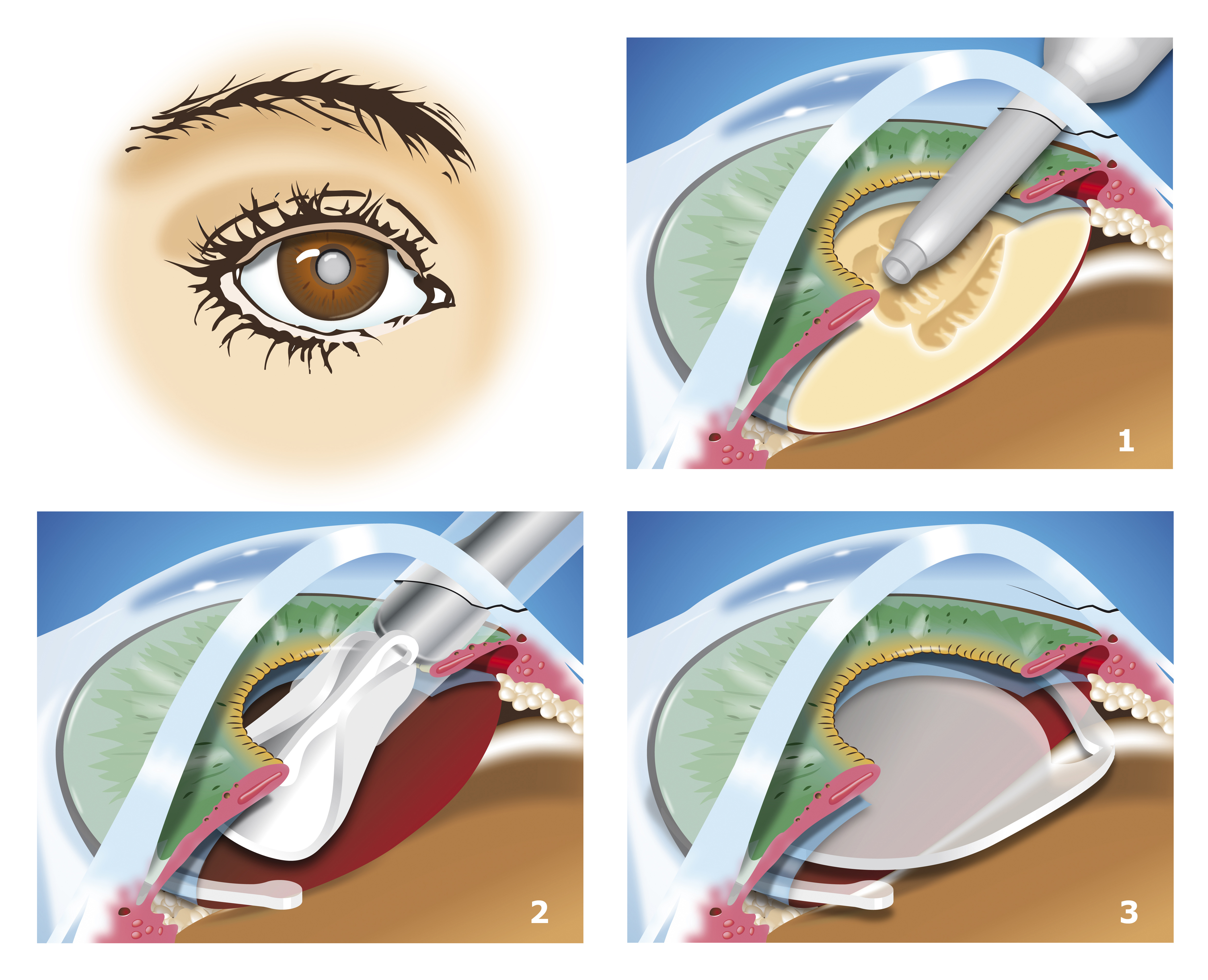
What is the process?The cataract surgery consist of two important steps:
- Phacoemulsification: the lens is pulverised with ultrasonic sound (i.e. high tones, inaudible to humans). These small lens fragments are immediately suctioned away from the eye.
- Lens implant: once the (cloudy) lens has been removed, a new (clear) artificial lens is inserted.
Both steps are performed through a tiny incision in the eyeball between 2 mm (micro-incision) and 3 mm (small incision). Because of this surgical technique, the patient can usually leave the hospital safely almost immediately and resume their daily activities the following day.
The implantation of an artificial lens can correct the eyesight at the same time. The power of the lens implant is measured before the operation on the basis of a precise measurement of the length and curvature of the eyeball.
The procedure is almost always carried out under a local anaesthetic through eye drops. In exceptional cases, a general anaesthetic is required.
Leaflet
LeafletMore information can be found in the leaflet below.


Cost estimate
Cost estimateCentres and specialist areas
Centres and specialist areas
Latest publication date: 16/05/2024
Supervising author: Dr Vanwynsberghe David


